A website dedicated to the truth.
Why is there something rather than Nothing?
If there is no God, there is no reason for anything to exist.
PHILOSOPHICAL
12/17/20253 min read
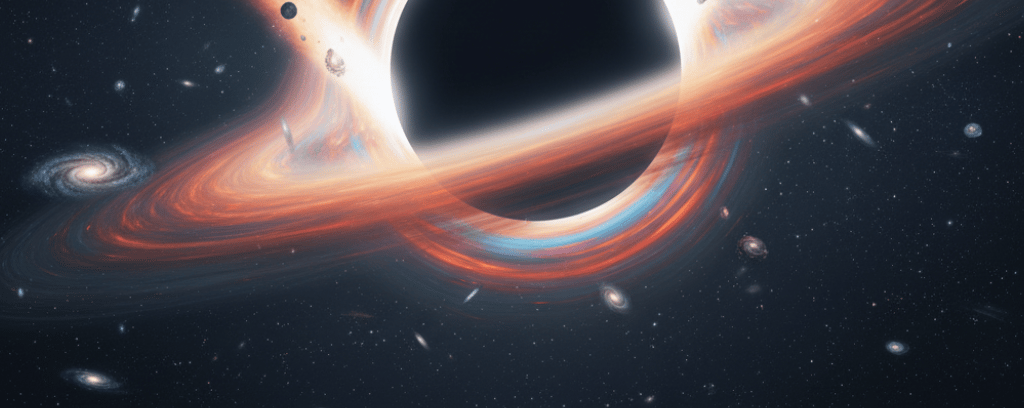
If there is no God, there is no reason for anything to exist.
The question "Why is there something rather than nothing?" is one of the deepest in human thought. Philosophers like Gottfried Wilhelm Leibniz in the 17th century called it the most fundamental puzzle of existence. At first glance, absolute nothing—no matter, no energy, no space, no time, no laws of physics—seems simpler and more "natural" than a vast, complex universe full of stars, galaxies, and life.
Why didn't reality stay in that effortless state of non-existence? Why does anything exist at all?
The Intuition: Nothing Seems More Likely
Many thinkers argue that nothing should be the default state. Existence requires explanation—something must account for why things are here—while nothingness needs none. It's perfectly symmetrical, arbitrary-free, and requires no cause or fine-tuning.
Evolutionists, Darwinists, and Atheists, all believe that Nothing? Created Everything? without any guidance and purely by chance, but this "something" is extraordinarily ordered and complex, especially at the beginning.
What Science Reveals About the Improbability of "Something"
Modern physics highlights why a universe capable of existing long-term—and especially one supporting life—seems profoundly unlikely without some deeper explanation:
The Low-Entropy Beginning The second law of thermodynamics states that entropy (disorder) tends to increase over time. Our universe started in an extremely low-entropy state—highly ordered—which allowed stars to form, galaxies to clump, and life to emerge. A high-entropy (maximally disordered) state would be uniform and lifeless, closer to "nothing happening." Physicists like Sean Carroll and Roger Penrose note that the odds of the universe beginning with such precise low entropy by random fluctuation are staggeringly small—Penrose calculated something like 1 in 10^10^123. Without a directed cause, the natural tendency is toward equilibrium (nothing interesting).
Fine-Tuning of Physical Constants The laws of physics depend on fundamental constants (e.g., strength of gravity, electromagnetic force, mass of particles). If these were even slightly different, no stable atoms, stars, or chemistry could form—let alone life. Illustrations of this fine-tuning show how narrowly balanced these values are for a life-permitting universe.
Random values would most likely produce a barren or short-lived cosmos. This precision suggests the universe is tuned for existence and complexity, not indifference or nothingness.
Naturalistic Attempts and Their Limits
Some scientists propose the universe arose from "nothing" via quantum fluctuations (as in Lawrence Krauss's A Universe from Nothing). However, critics (including philosopher David Albert) point out that Krauss's "nothing" is actually a quantum vacuum with fields and laws—still "something." True absolute nothing has no properties, no fluctuations, no laws.
Others suggest a multiverse: infinite universes with varying constants, making ours inevitable by chance. But this pushes the question back—why a multiverse generator tuned to produce varied universes? And it remains speculative, without direct evidence.
Entropy drives systems toward maximal disorder (equilibrium, where nothing changes), yet our universe started far from that, enabling billions of years of evolving complexity.
How These Scientific Insights Point Beyond Pure Naturalism
Science describes how the universe behaves but struggles with ultimate why questions. The improbable low-entropy start, exquisite fine-tuning, and the very existence of lawful physics suggest reality is not self-explanatory.
Many philosophers and scientists (from Leibniz to modern thinkers like Alvin Plantinga and Robin Collins) argue that a necessary, transcendent mind—God—provides the best explanation: a timeless, immaterial being whose existence is not contingent, who grounds the laws, initiates the low-entropy beginning, and fine-tunes constants for a purposeful cosmos.
Without such a foundation, "something" existing stably and fruitfully seems far less probable than nothingness or fleeting chaos.
The wonder of existence—stars shining, consciousness pondering—may not be a cosmic accident, but evidence of intentional design. As science uncovers deeper layers of order and improbability, the ancient question gains new force: perhaps there is something rather than nothing because there is Someone.